
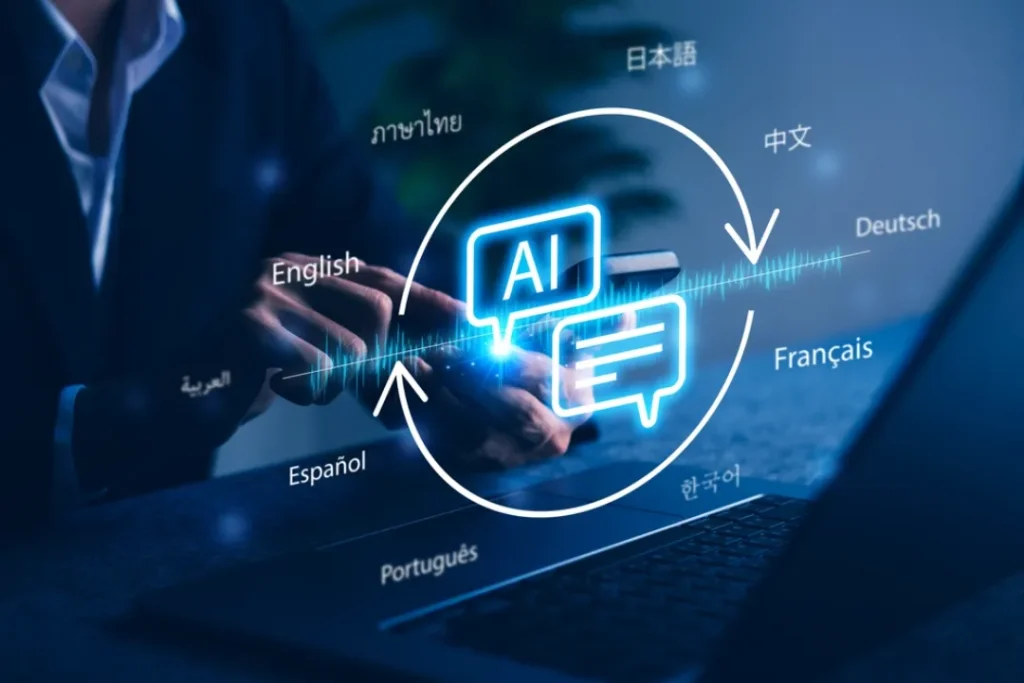
AI speech-to-text technology has changed the way we record, save, and process spoken words in today’s fast-paced digital world. This powerful AI-powered tool turns spoken words into accurate written text in seconds, making it easier for professionals, students, and businesses to get things done faster than ever.
Over the past ten years, speech recognition technology has changed a lot. Modern AI-powered systems are accurate more than 95% of the time, so they can be used for a wide range of tasks, such as medical transcription and real-time captioning. You can get the most out of this technology by learning how it works and how to use it in real life.
How AI Speech to Text Technology Works
AI speech-to-text systems use advanced machine learning algorithms and neural networks to turn audio into text. The software looks at sound waves and figures out phonemes, words, and sentences with amazing accuracy when you speak into a microphone or upload an audio file.
There are a lot of complicated steps involved in the conversion process. The AI processes the audio first, getting rid of background noise and making the voice clearer. Next, acoustic modeling looks at the audio’s features, and language modeling guesses what words will come next based on the context. The decoder then puts all of these parts together to make accurate text output.
Deep learning has made speech recognition much better. Modern systems can recognize different accents, dialects, and speaking styles because they learn from huge datasets that include millions of hours of spoken language. AI speech-to-text accuracy gets better all the time because it keeps learning.
Key Benefits of Voice-to-Text Conversion
Enhanced Productivity: Typing speeds average 40 words per minute, but speaking naturally can reach 150 words per minute. AI speech-to-text technology makes it three times faster to create content, which lets professionals get more done in less time.
Improved Accessibility: Voice-to-text solutions are very helpful for people who have physical disabilities, dyslexia, or other conditions that make it hard for them to type. This technology makes it easier for everyone to make content and talk to each other.
Multitasking Capability: Speech recognition lets you use your hands-free, which is great for times when you need to do more than one thing at once. While examining a patient, doctors can write notes, drivers can safely write messages, and professionals can write emails on their way to work.
Cost Efficiency: Automated transcription gets rid of the need for costly manual transcription services. Businesses save thousands of dollars every year and get faster turnaround times and consistent quality.
Better Documentation: Real-time voice-to-text conversion makes sure that all important conversations, meetings, and interviews are recorded. When AI takes care of the paperwork, nothing gets lost or forgotten.
Popular Applications and Use Cases
Business and Professional Settings
More and more businesses are using AI speech to text to write down what was said in meetings, which makes accurate minutes automatically. Sales teams use voice-to-text to keep track of conversations with clients, which helps them follow up correctly and manage customer relationships better.
Healthcare Industry
Speech recognition is used by doctors and nurses to write down patient records, write prescriptions, and take clinical notes. This technology makes it easier for healthcare providers to do their jobs, which means they can spend more time caring for patients.
Education and Research
Lecture transcription, interview documentation, and research note-taking are all helpful for students and researchers. AI speech to text makes studying more effective and makes sure that all of the important information is included in academic work.
Content Creation
Bloggers, journalists, and other content creators use voice-to-text to quickly write articles, scripts, and posts for social media. This speeds up the creative process while keeping writing styles that sound natural and conversational.
Legal Services
Law firms use speech recognition to prepare legal documents, take depositions, and go to court. In legal situations where every word counts, accurate transcription is very important.
Choosing the Right Speech to Text Solution
There are a few important things to think about when choosing AI speech to text software. Accuracy is still the most important thing. Look for solutions that have an accuracy rate of 95% or higher. If you work in a multilingual setting, language support is just as important.
How well the solution fits into your current workflow depends on its integration capabilities. The best tools work well with well-known programs like Microsoft Office, Google Workspace, and software made for specific industries.
You can’t ignore privacy and security, especially when it comes to private business or medical information. Make sure that the solution you choose has encryption, secure data storage, and follows rules like HIPAA or GDPR.
Customization options make industry-specific terms more accurate. Professional-grade solutions let you train your vocabulary so that you can correctly recognize technical terms, names, and specialized language.
Maximizing Speech Recognition Accuracy
There are a number of ways to make AI speech to text work better. Algorithms can better understand what you say if you speak clearly and at a normal speed. Use good microphones in quiet places to cut down on background noise.
Commands for proper punctuation make things easier to read. When you speak, learn how to naturally say “comma,” “period,” and “new paragraph.” Most modern systems automatically understand these commands.
Teaching the AI your voice makes it more accurate for you. A lot of solutions let you make a voice profile that learns your speech patterns, accent, and the words you use most often.
The system learns what you like by reviewing and correcting things often. Advanced AI systems learn from the mistakes you make and fix them, which means that similar mistakes will happen less often in future transcriptions.
The Future of Voice-to-Text Technology
The technology that turns speech into text with AI is still getting better quickly. New emotion detection features are coming out that let systems pick up on more than just words. They can also pick up on tone and sentiment. This gives transcriptions more depth and meaning.
Speech recognition and real-time translation work together to break down language barriers. In the future, systems will be able to transcribe and translate at the same time, making it easier to communicate with people all over the world.
AI will be better able to understand industry jargon, cultural references, and the subtleties of conversation now that it has a better understanding of context. These improvements will make voice-to-text transcription as good as human transcription.
Conclusion
AI speech-to-text technology is a big change in how we record and process information. Its speed, accuracy, and ability to do many things make it a must-have for professionals in all fields today. Voice-to-text conversion has real benefits, like making work easier, increasing productivity, and making things easier to find.
Speech recognition will get even better, easier to use, and more a part of our daily lives as AI continues to develop. If you use this technology now, you’ll be ahead of the curve and able to use it to its full potential for personal and professional success.
The question isn’t whether or not to use AI to turn speech into text; it’s how quickly you can add it to your workflow to get the most done in the least amount of time.