
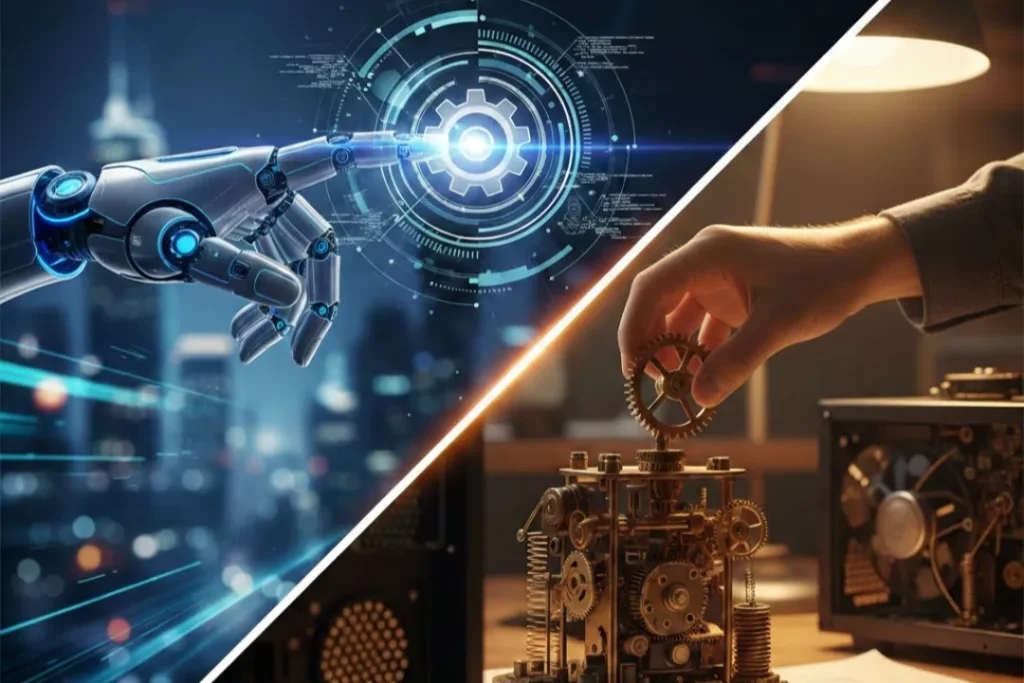
You are in the middle of preparing a very significant presentation when your computer automatically restarts itself to update. Or perhaps you have been clicking Remind Me Later several weeks and only to realize that your system has been exposed to security threats since. The two scenarios demonstrate the actual predicament many users have to choose when it comes to automatic software updates or manual software updates.
The fact is that, there is no standard answer. What you consider to be an ideal update plan would be based on your level of technical comfort, the way you use the devices, and what you are prepared to sacrifice between convenience and control. This guide is the dissection of both of these approaches to enable you to make a right decision in your situation.
What Makes Automatic Updates Different
Automatic updates are automatic without any input on your part. When this is turned on, then your operating system or applications update automatically on their own time. Windows does the same on the second Tuesday of every month (so-called patch Tuesday), whereas macOS and mobile systems make updates as necessary.
It automatically runs in the background and updates when your phone is not in use and proceeds to install them at the times you have set as inactive hours. Security patches are normally installed automatically, whereas larger feature updates may wait until you can confirm this as per your settings. This hands-off strategy implies that you will always have the latest version without even having to consider it.
Installing automatic updates is the default setting of most devices that a modern user will find reasonable. The system also manages both essential security patches and performance boosters and ensures that your device is protected against the recent threats even without the technical expertise on your part.
The Case for Going Automatic
The largest issue most individuals face when it comes to software upkeep is that they simply forget to do it, and automatic updates resolve this issue completely. Studies indicate that two out of three successful cyberattacks take advantage of already vulnerable vulnerabilities that were patented. That is, individuals are hacked due to non-updates of their software, as opposed to non-existence of the updates.
Automatic updates have no time lag between a patch being released and your system being patched. Hackers are rapid and occasionally they take advantage of vulnerabilities that have been identified within hours. Automatic updates make such a window almost shut instantly, with no chance of attackers to strike.
Automatic updates eliminate the guess work to non technical users. You do not have to know what a security patch does and whether you need it. You need not need to consult compatibility issues or user technical release notes. Everything is done by the system and you can actually use your computer rather than work on it.
The convenience factor can hardly be overestimated. A set it and forget it approach is of great advantage to busy people, students and light users. You do not waste brainpower trying to choose whether to update it or not, or asking yourself whether you have become a victim of outdated security patches.
When Automatic Updates Cause Problems
Convenience has the other face of unpredictability. Auto-updates may restart your computer when it is not convenient when you have not set active hours. In spite of settings, there are also cases of forced restarts, which may interrupt your work or lead to the loss of data in case you are working on files that are not saved.
The updates may contain bugs, which were not in the earlier versions. What was a feature that was totally fine yesterday could fail following an automatic update and you will not have had the opportunity to research the problem or delay an installation until a fix is provided. This occurs frequently than it should, especially when there is a major update on features that involves a change of system behavior.
It is compatibility issues that strike the most when you are working with special software. The tools that are used by video editors, graphic designers, and software developers among others do not always go well with the latest systems. A software bug can also be interpreted by auto update making the software useless until the vendor has issued a compatibility patch that may take days or weeks.
There is also the bandwidth issue. Big updates may take up a lot of data and this is important when you are on a metered connection or have a limited amount of data in a month. Auto updates do not consult anyone before downloading large files of over a gigabyte, which can just consume your data allowance unbeknownst to you.
Understanding Manual Update Control
Visa versa Manual updates reverse the script. Rather than your system automatically updating they are resolved to check updates manually and decide what to install and when to install it. This implies that you should open your settings once in a while and look at any updates that are showing up and press install at a convenient time.
It is a process, which needs greater effort and technical awareness. You should be aware of the location of update settings, the work of various types of updates, and properly decide on the time of installation. This is empowering to some of the users. To others, it is just additional work they are not willing to take.
Manual updates best suit individuals that are familiar with their systems, and have certain requirements in terms of stability and compatibility. This method is especially popular among IT professionals, gamers with speed-sensitive systems, and other people who run mission-critical code since they do not want to be caught by some surprises when performing some significant tasks.
Why Some Users Swear by Manual Control
The main benefit of the manual updates is control. You choose the precise time of updates which translates to no unexpected restarts when you are doing a presentation, no interruptions during a gaming session and no unexpected changes when you are about to meet a big deadline. You are able to schedule updates during your lunch break, after work schedule as well as during specific maintenance periods.
Manual updates provide you with the ability to research and then install. In case of any known issues with a new update, you will see complaints on the internet before it reaches your system. It is possible to wait till in a few days Microsoft or Apple issue a hotfix and then install both updates simultaneously. Such a wait and see strategy has spared numerous users buggy releases that crashed or were incompatible.
In the case of businesses and professionals whose workflow is specific, manual control also prevents a disruption in the workflow. Think about the case of a video production company, and the update of MacOS crashes your main editing software. Under manual updates, you are able to test the update on a second machine to make sure that it works with all your tools, and then update your primary workstations only after that.
One more advantage is bandwidth management. When you have a limited data plan or slow internet connection, manual updates allow you to schedule when to download the updates manually during off-peak hours or when you are able to access faster and unlimited connections. You no longer have to have a sudden 5GB download that just takes place automatically at the most inopportune moment.
The Risks of Manual Management
Human nature is the greatest threat of the manual updates. Reminding one to do things tomorrow is so easy to just do when one just clicks on Remind me tomorrow and then forgets about it weeks or months later. What began as deliberate lagging turns out to be an act of neglect and your system would fall prey to the security threats that are known.
Research has revealed that manually operated systems are usually lagging behind update, in some instances, months. Every week that you make late, another week hackers have to use known vulnerabilities. This old Java plug or older WordPress version is an open door to malware, and just because you kept on delaying the update.
Constant discipline and time are also needed in the process of manual updates. You must ensure you regularly check updates, read release notes, know what you are installing and make an informed choice. This is homework of which many people never volunteered. The mental burden accumulates particularly when you are handling updates in different devices.
There is also a threat of not installing important security patches at all. Not everything is announced by notifying updates. You could believe you are safely evading a buggy feature update when you are really missing a critical security update that was included with it.
Finding the Middle Ground: Hybrid Strategies
Majority of users do not have to decide on whether to have full automation or total manual control. A hybrid solution will unite the security advantages of automatic updates and the stability advantages of the manual control. This option is set up to automatically install security patches and manually accept feature updates and major version upgrades.
It is easy to establish a hybrid strategy on contemporary systems. In windows, go to settings, windows update and then advanced options. Allow the automatic installation of security updates but set the option of notification of feature updates. Turn on your weekly schedule, and make your working hours active to avoid restarting the system during the working hours, and also make weekly maintenance time when your system can update pending updates.
In Mac OS, open System settings and then under the general section, Software update and then click the info button next to the Automatic Updates. Allow automatic updates of security updates and system files but not automatic updates of MacOS updates. This has the advantage of keeping your system safe as well as allowing you to manage significant version changes that can cause compatibility problems.
Regarding applications, look at your application. Antivirus software and web browsers are critical security software, and therefore, they should automatically update themselves because at the front line they serve as your defense. Application professional tools may be handled manually so as to test compatibility then update them. In between falls productivity applications such as email clients, and automatic updating is a fine feature of most users.
Update Strategy Comparison
| Strategy Type | Best For | Security Level | Convenience | Your Control |
| Fully Automatic | Home users, non-technical individuals, mobile devices | High | Very High | Low |
| Fully Manual | IT professionals, specialized workflows, testing environments | Medium (requires discipline) | Low | Very High |
| Hybrid (Recommended) | Most users, small businesses, remote workers | High | High | Medium |
| Centralized/Managed | Enterprises, organizations with IT departments | Very High | Medium | High (for IT) |
Best Practices Regardless of Your Choice
Regardless of the strategy you adopt, there are some practices that apply in all. It is always important to have a system restore point or a backup of the system before making significant updates. It has a net where you can roll back in case of something going wrong. Ensure that you are not short of free storage, Windows updates generally require 20GB or more, and MacOS updates require 35-50GB or more depending on the version.
Always shut down all the running applications and then update. Open programs may create a conflict with the process of installation or may lead to data loss. Even when being automatic, take note of what is being installed. Spend some seconds to look at update notifications to know what has changed on your system.
Schedule report to update your strategy after every three months. Over time, your needs are likely to evolve such that what worked when you were a student may not work for you when you have a business. Periodic reviews will make sure that you are set correctly in relation to your current state.
Making Your Decision
The first step is to be honest and to evaluate your level of technical comfort. Automatic update with activated hours will be handy in case you are not sure on how to troubleshoot computer troubles. A hybrid solution will provide the most optimal combination in case you need technical expertise and have certain compatibility requirements.
Take into account the level of importance of your system uptime. In case unexpected restarts would result in significant issues in your work, then lean towards more manual control using scheduled maintenance windows. In case minor disruptions are not a major problem, then automation is more appealing.
Reflect on your security needs. When dealing with sensitive information, or the areas of work are related to healthcare or finances, and are dealing with customer data, automatic updates to security should be a priority. The minor inconvenience is compensated by the security.
Your Next Steps
Go and verify any pending updates of your gadgets immediately. Get a glimpse of what lies ahead and compare with what you want to do at this moment. When you are using fully manual updates but you tend to forget to do it, then select a hybrid solution. In case you are constantly interrupted by automatic updates at the most inappropriate moments, schedule your active time or change to hybrid mode.
The ideal update strategy is the one that you will be able to stick with. That may be by being fully automated, manually controlled, or to have a compromise, the most dangerous option is to ignore updates all the time. The maintenance of your security, performance and stability all depends on the maintenance of your software hence make a choice and set up your settings.
Automatic update manager keeps your system safe against security breaches, system crashes, and ensures that your devices perform optimally. Instead of looking at updates as a break, you should look at them as routine maintenance that will prolong the life of your technology and secure all the information stored in it.