
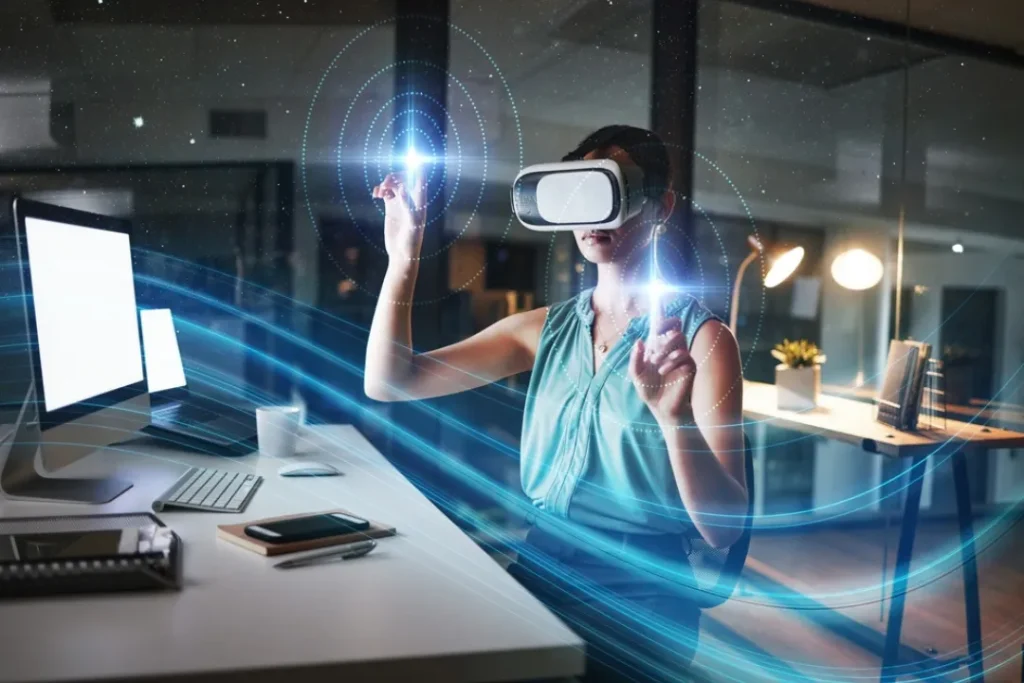
The metaverse is among the hottest topics being discussed in the technology world today, but what exactly is it? At its most basic, the metaverse is a collectivity virtual shared space within the convergence of virtually enhanced physical reality and persistent virtual worlds. It is often referred to as the next evolution of the internet-a 3D digital The metaverse is one of the most discussed concepts in terms of technology in the recent time, but what is exactly metaverse? At its essence, the metaverse is a collective, virtual shared space that is created by the coming together of the virtually augmented physical reality and persistent virtual worlds. It is commonly defined as the next evolution of the internet, in which people will interact, work, play, and trade through a 3D digital universe using advanced technologies such as virtual reality (VR), augmented reality (AR), blockchain, and artificial intelligence.
The Metaverse: A Digital Universe
The metaverse is not a one-time specific platform or company but a series of interconnected virtual worlds. In this digital universe, the users have the ability to create avatars, explore immersive environments, attend events, and social and economic activities. The experience is persistent, meaning that the metaverse persists and develops even when users are offline. This persistence means of living in a world in which the digital world is breathing and in which deeds have consequences and developments take place incessantly.
Unlike traditional online platforms which you just visit, the metaverse is some place you live in. It brings social interaction, 3D virtual space and digital ownership into one ecosystem. Users can transfer their avatars and digital property from one platform to another thanks to the concept of interoperability. This is to say your virtual identity, possessions and experiences aren’t locked to a single service, but are able to travel to with you throughout the metaverse.
Historical Origins and Evolution
The term “metaverse” was first coined by Neal Stephenson in his 1992 science fiction novel “Snow Crash” where he described a virtual world that people could access using avatars. In the vision proposed by Stephenson, the metaverse was a massive virtual reality-based successor to the internet, where people could escape their physical reality and live alternative lives digitally.
Today, the concept is no longer confined to fiction, with real-world applications for it and platforms being introduced in different industries today. What was once pure speculation, is now becoming reality as companies are investing billions on developing the technologies and experiences of the metaverse. The vision has evolved to include not only escapism but also practical use in business, education, healthcare and connecting with others.
Key Features of the Metaverse
Persistent Virtual Worlds: The metaverse does not “go off.” Even when users log-off, the world goes on and evolves. Events occur, economies operate and other users go about their business. This persistence gives you a feeling of a real, living world, as opposed to a temporary game session to play when you leave.
Immersive Experience: Users interact with the metaverse using VR and AR, and feel as if they are in a physical environment. This immersion enables emotional bonds and impressions that flat screen interfaces cannot create. The idea is to fool your senses in trick you into believing you are really somewhere else.
Interoperability: Users can move their avatars and digital assets from one platform to another platform and environment. This means that you could in theory purchase a virtual outfit at one place, and wear it at another, or you could take your avatar out of a social space and into a gaming environment, without having to start all over again.
User-Created Content: The metaverse is created by the users who can create and share virtual spaces, objects, and experiences. This democratization of content creation will allow anybody to be a designer, architect, or creator of experiences that contribute to this ever-growing digital universe.
Digital Economy: The metaverse is part of a digital economy, where users can buy, sell, and trade virtual goods and services. This economy has real-world value as well, with some virtual real estate being sold for millions of dollars, and digital artists making a lot of money from their creations.
Key Technologies Behind the Metaverse
Virtual Reality and Augmented Reality
VR and AR are the base technology for the metaverse. VR offers completely immersive digital environments in which users can explore with the aid of special headsets. When you wear on a VR headset you’re transported to the completely different world with 360-degree visuals and spatial audio to give you a convincing sense of presence.
AR superimposes digital information on the real world by combining the physical and virtual world. Through AR glasses or smartphones, the digital objects and information are viewed and experienced through the physical environment. These technologies allow users to engage with the metaverse in ways that are realistic and engaging, whether it’s fully immersive or through augmenting the physical world.
Blockchain and Digital Ownership
Blockchain technology is essential to the digital ownership in the metaverse. It enables users to purchase, sell and trade virtual goods and assets including virtual real estate, clothing and art with verifiable ownership and scarcity. These assets are represented in the form of non-fungible tokens (NFTs) which ensures authenticity and ownership due to its decentralised record-keeping.
This technology addresses a basic issue in the digital spaces; how do we prove that we actually possess something digital? Blockchain creates something permanent and tamper-proof which can’t be duplicated or erased providing digital assets with real value, making a viable virtual economy a reality.
Artificial Intelligence
AI is a way to increase the impact of the metaverse, through the generation of personalized experiences and real-time interactions. AI algorithms can be used to analyze user behavior and preferences and personalize recommendations and experiences for users. This makes the metaverse more immersive and enjoyable because the environment will change according to your interests and style.
AI is also being used to power non-player characters and virtual assistants that can be used to have conversations with players, deliver information, and create dynamic experiences. Due to the continuing improvements of AI, these virtual entities learn to be more realistic and helpful to users, increasing the population and responsiveness of our digital world.
Cloud Computing Infrastructure
Cloud computing is what is required to support the metaverse. It allows real-time processing of data, storage of data, and access to virtual environments ensuring a seamless and scalable user experience. The computational requirements of the metaverse are vast, and it will need massive data centers and high-speed networks to ensure that the metaverse can provide smooth and lag-free experiences to millions of simultaneous users.
Cloud technology also makes the metaverse more accessible by enabling users with less powerful devices to access sophisticated Virtual Environments. The actual heavy processing occurs on remote servers and only the visual result is streamed to the user’s devices.
How Does the Metaverse Work?
The metaverse is accessed on computers, smartphones and special VR/AR headsets. Users create avatars – digital representations of themselves – and move into the metaverse to interact with other people and digital environments in the metaverse. These avatars can be based on reality or fantastical creations that enable the users to express themselves in a new way.
Activities in the metaverse include socializing with friends and meeting new people, gaming in immersive virtual worlds, working in virtual offices and meeting up with colleagues and in meetings, shopping in virtual stores and marketplaces, attending concerts, conferences, and events, learning through interactive educational experiences, and creating and selling digital art, clothing, and other virtual goods.
The metaverse is persistent, i.e. it remains in existence and evolving even when users log off. This makes for a dynamic and ever changing digital world in which you actions make a lasting impact. Users can transport their avatars and digital assets from one platform to another, courtesy of the concept of interoperability, however, this smooth cross-platform functionality is still being developed.
Accessing the Metaverse
To get into metaverse, users normally have to use special hardware to access the metaverse, like VR headsets or AR glasses for the most immersive experiences. Popular VR headsets were the Meta Quest, PlayStation VR, and HTC Vive. However, there are also web-based platforms that would enable users to enter into the metaverse using computers or smartphones, making the technology more accessible to those who do not have access to dedicated hardware.
Popular platforms include Meta’s Horizon Worlds, which is a social VR platform where users can create and explore virtual spaces; Decentraland, a blockchain-based virtual world where users can buy land and create experiences; Roblox, a gaming platform with user-created worlds and social features; and VRChat, a social VR platform that is known for user creativity and community.
Creating and Customizing Avatars
Avatars are digital representations of the users in the metaverse. Users can create and customize their avatars in order to represent their personalities and preferences, or to play around with other identities altogether. Different platforms provide varying degrees of customization ranging from cartoon characters to life-like digital humans.
Avatars can be dressed with virtual clothing, accessories with digital products, and represented with different gestures and expressions. Some users spend a lot of time and money perfecting their avatar’s appearance for it is their identity in the virtual world. This digital dress industry is rapidly booming with exclusive virtual clothes and accessories designed by the designers.
Real-World Applications of the Metaverse
Social Interaction and Collaboration
One of the most exciting aspects of the metaverse is the potential for social interaction and collaboration. Users are able to connect and socialise with other people in virtual space, which includes attending events, discussions and working together on projects. This brings about some new opportunities for socialising, networking and teamwork, regardless of physical location. Friends thousands of miles apart can hang out together and teams can work together like they really are in the same room.
Education and Training
The metaverse is being used for education and training, and it has provided immersive and interactive learning experiences. Students can explore historical sites, perform virtual science experiments, and take part in simulated real-world situations. It’s used in metaverse for training professionals and teach other fields like medical procedures or emergency response, which trains them in a safe and controlled environment.
Entertainment and Gaming
The metaverse is changing the entertainment and gaming industries with immersive and interactive experiences. Users can attend virtual concerts, theater events, and sports events and feel like they are physically there. VR gaming enables gaming players to enter into virtual worlds and engage with their environment and virtual characters in ways not possible before, providing very entertaining means of entertainment.
Business and Commerce
The metaverse is opening up new business and commerce opportunities. Companies can create virtual storefronts, have virtual events and engage with customers in immersive environments. The metaverse is a digital economy, where people can buy, sell and trade virtual goods and services. Some companies are already setting up a virtual headquarters and conducted meetings in metaverse spaces.
The Metaverse vs. Virtual Reality
While VR is one of the key technologies that make up the metaverse, it is not the same as the metaverse itself. VR is a tool that allows for immersive digital experiences-even experiences for the content. The metaverse however is a more expansive concept that uses VR, AR, the blockchain, and AI as a whole, and as an economy, ecosystem. Think of VR as the window that you look at the metaverse through, but the metaverse exists independent of one viewing technology or another.
The Future of the Metaverse
The metaverse is a revolutionary concept that combines physical and digital realities and brings them together to create a seamless and immersive experience. It is driven by advanced technologies, such as VR, AR, blockchain, and AI, and it is creating new opportunities for social interaction, digital ownership, and personalization. As the metaverse continues to evolve, it is expected to revolutionize industries and alter the way we interact with digital environments.
The coming years will see more integration between the physical and virtual worlds with AR playing a larger role in bringing elements of the metaverse into everyday life. Standards for the interoperability will evolve in which there will be an easy movement from one platform to another. The technology will become more accessible and user friendly and will see an increase in the user base of the metaverse from the early adopters to the mainstream.
Frequently Asked Questions
What equipment do I need to access the metaverse?
Basic experiences in the metaverse are accessible by means of regular computers or smartphones. To have immersive VR experiences, you will need a VR headset such as Meta Quest, PlayStation VR, etc. Some of the platforms also support AR glasses. However, there are quite a few platforms that provide access to browsers with no special equipment.
Is the metaverse just for gaming?
No, While gaming is an important component of the metaverse, it will also include social interaction, business meetings, education, virtual events, shopping, art galleries, real estate, and much more. The metaverse is evolving into a place that is used for all kinds of activities which is a general purpose digital space.
Can I make money in the metaverse?
Yes. People make money in the metaverse by virtue and sale of digital art and NFTs, real estate and purchase of virtual real estate, designing virtual clothing and accessories and organising events and experiences, offering services such as virtual architecture or consultancy, trading in virtual goods and currencies.
Is my data safe in the metaverse?
Data safety is different for each platform. Look for platforms that have strong privacy policies, encryption, and security measures in place. Be wary of sharing personal information, have strong passwords and utilize two-factor authentication, and know what data each platform is collecting and how it’s being used.
Do I need cryptocurrency to use the metaverse?
Not always. Some metaverse platforms use cryptocurrency and blockchain technology for transactions and digital ownership, while others use traditional methods of payment. It is dependent on which platform you are using.
What’s the difference between the metaverse and the internet?
The internet is a network of interconnected websites and services that are accessed by browsers and apps and are mostly experienced on flat screens. The metaverse is envisioned as an evolution of the internet, but you are in the experience instead of watching it and consist of persistent virtual worlds, spatial computing and having a sense of physical presence.
Will the metaverse replace the real world?
Metaverse is not supposed to replace the physical reality but to enhance and extend what we do. It offers new ways to connect, work, learn and play, but is adding to the value of real world interactions and experiences, not replacing them. The idea is to connect the physical and the digital worlds.
How do I get started in the metaverse?
Start with some browser-based platforms such as Roblox or Decentraland that do not require special equipment. Create an avatar and explore virtual environments. Join communities that are related to your interests. If you are fond of the experience, then you should invest in a VR headset for more immersive experiences. A lot of the platforms have free accounts to get started on.