
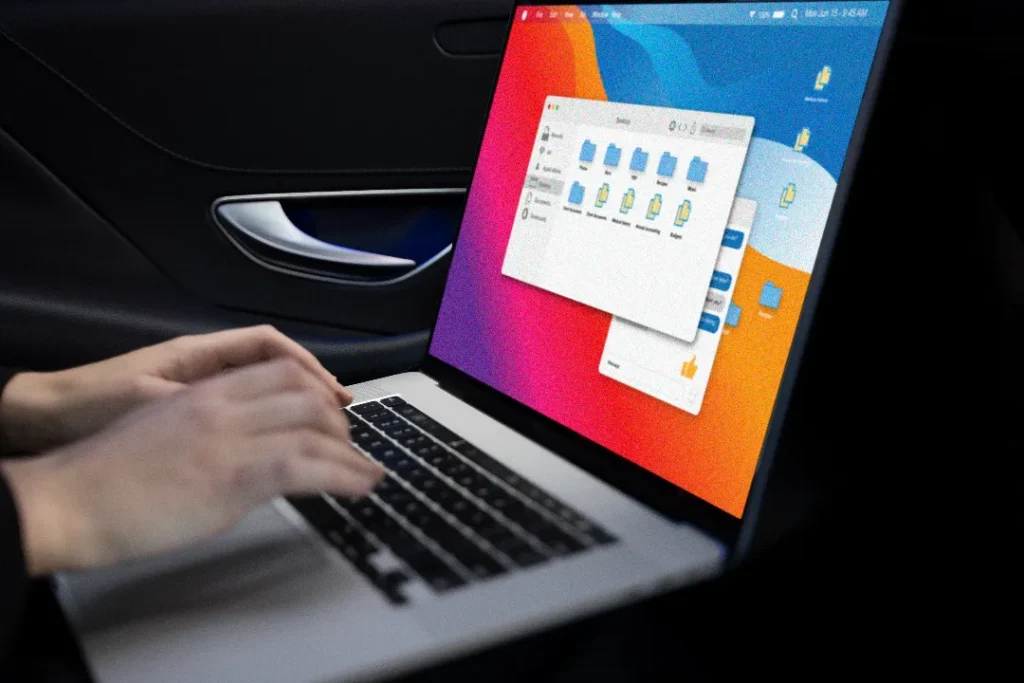
Most Mac users only explore the potential of their machines. You paid for a premium device, but you are probably using it just like a basic laptop with a gorgeous screen. That needs to change.
Your Mac comes with many features that can change the way you work, and Apple does not advertise them all. Some are three menus down, others require keyboard combinations that seem just too complicated, and others only appear if you know where to click. The good news? The best thing is after knowing these tricks, it becomes simple to use them. These tricks will make your macOS usage different, whether you are a new user or an old Mac user. To those who are on the quest of which platform to settle on, it is good to know how each system will maximize its performance to enable you to maximize the chosen platform.
Spotlight Search: Your Mac’s Hidden Superpower
Most people tend to think from the concept of Spotlight (Command + Space) that it can only be used to find files. That is the equivalent of using a Swiss Army knife to open bottles. Spotlight performed math calculations without having to open Calculator. Type “45 * 12” and get instant results. It converts currencies pulling live exchange rates Need to know how many feet in 25 metric Yahoo Threaded Light Reference On Teref 20th Century June 2006 in? Type “25 m in feet,” and you’re done.
Rather than go about searching the file in Finder folders, press Command + Space, enter a couple of letters of your file name, and press Enter. You’ll find documents quicker than any folder structure will allow you to do. Previews of files and definitions of words are also available for Spotlight, as are searches of your emails without opening Mail.
Keyboard Shortcuts That Actually Save Time
Although every Mac user knows that to copy a piece of information, Command + C is used, as is Command + V to paste, these are not the only available shortcuts. Copying your entire screen Command + Shift + 3 – Selecting an area; Command + Shift + 4 – Full-screen system Command + Shift + 5 – Screen-record system But the twist is as follows: Command + Shift + 5 opens a fullscreen and screen record system.
For window management, Command + M requires windows to minimize, and Command + H has the advantage of hiding entire applications. Command + Tab causes the app to switch and shifts the other apps backward. Command + Grave accent (the key above Tab) goes from one window in the same application to another.
Text editing Pick up speed with simple shortcuts. Option + Delete deletes the whole words instead of single characters. The Mac command “delete” takes files to the trash upon command. Also, when resizing a window, press the Option key; the window will grow out of the middle rather than out of one of the corners.
Performance Tweaks That Don’t Require Technical Knowledge
Your Mac likely takes longer than usual to boot because programs you installed months ago are configured to start automatically. Go into System Settings, General, and click on Login Items. You should see all of the programs that open up when you turn on your Mac. Enable and disable; disable everything that is not essential.
The visual effects that macOS employs are amazing, but their use indeed appears to consume resources in the older machines. In all system settings, in the category Accessibility and Display, the options Reduce motion and reduce transparency are to be switched on. Your Mac will not be as flashy, though it will be much snappier.
You should be concerned about storage management. The inbuilt Storage utility (Apple menu – System Settings – General – Storage) will at least tell you the precise location of your gigabytes. The feature of optimizing storage has ensured that local copies of files stored on the iCloud are not lost by limiting access. This process can liberate 50 GB or above.
Activity Monitor: Understanding What Your Mac Is Actually Doing
Activity Monitor is placed in the Utilities folder, but it needs to be placed in the Dock. This tool displays exactly which apps take your processing power and memory. Order resources by CPU or memory so as to detect resource hogs. That forgotten browser tab? It may be consuming 2GB of memory and 40% of your processor.
When apps freeze, Activity Monitor is essential. Locate the unresponsive program, click on it, and press the X button to terminate it. The Energy tab also shows the apps consuming the most battery, and this feature is useful, especially on MacBooks.
Finder Secrets That Improve File Management
The toolbar of Finder is customizable. Click View – Customize Toolbar (drag useful buttons such as “Delete” and “New Folder” into your toolbar). Use the Path Bar (View – Show Path Bar) to enjoy the benefits of being able to see exactly the location of files in your classifier:
Smart Folders: Smart Folders are used to automatically collate the files that correspond to certain criteria. For example, you may make up one that displays all the documents that have been modified in the last week or all of the images that are more than 5 MB in size. They keep up with changing files on your computer.
Tags are used to transform organization across different folders. In Finder, right-click on a file, give it a color-coded tag, and all files are grouped in terms of the tag in the sidebar. A single file can hold multiple tags but could be found in one folder only.
Comparing macOS Features Across Operating Systems
The comparison of macOS with other platforms makes you appreciate the uniqueness of this operating system. The main features can be compared expeditiously as follows:
| Feature | macOS | Windows | Linux |
| Spotlight Search | Built-in, instant file search and calculations | Windows Search (slower) | Varies by distribution |
| Virtual Desktops | Mission Control (Swipe gestures) | Task View | Available in most DEs |
| Security Model | Gatekeeper + FileVault | Windows Defender | Varies, generally strong |
| Backup Solution | Time Machine (automatic) | File History | Manual or third-party |
| System Updates | Integrated, less frequent | Windows Update (monthly) | Distribution-dependent |
This comparison is similar to the overall situation of operating systems, where different operating systems are in trade-offs between usability, control, and security.
Security Settings You Shouldn’t Ignore
FileVault will encrypt your entire drive to protect your data if your Mac is stolen. Modern machines do not have much impact on the performance. In the System Menu, go to Privacy and Security- FileVault and turn it on.
Check later permissions Check later permissions Recurrently check app permissions to determine what is running on your computer, and ensure you do not have any unnecessary apps installed. Quick Look is an application that enables one to preview the files without accessing them. Click on any file and hit Space, and you are able to see its contents instantly. Applications need permission for your camera, microphone, contacts, location, etc., and then you have access to them indefinitely unless you decline them. Check the privacy and security settings and revoke the permission of the applications that you are not using.
The firewall is employed to deny inbound connections to the network. You have to go to Privacy and Security – Firewall and turn it on. You may not notice any difference when using it in your day-to-day use, but you realize that there are traps that lie in waiting in case there is a security threat.
Hot Corners and Quick Actions
Hot Corners cause actions from moving your cursor to corners in the screen. Now go to the settings on the desktop, focus on “Desktop & Dock,” and scroll until you reach Hot Corners. Assign each of the corners a function, such as to show the desktop, to start the screensaver, or to open the mission control. This idea sounds hokey until you try it for a week.
Quick Look is applied to preview the files without actually opening them. Click on any file and hit Space, and the file contents are displayed in front of your eyes. This functionality has worked for PDFs, images, videos, and most document types. There is even an option to play videos and scroll through multiple pages of a PDF.
Making Your Mac Work for You
Peptide configuration often distinguishes a frustrating computer from a productive one. The default settings suit an average user, but you are unique. You have particular workflows and personal habits; you deserve a quite customized setup.
Begin with two or three of these changes in this guide. Maybe disable some of those startup things that you find are slowing your boot time, or learn the screenshot shortcuts that you will use the next day. Enable FileVault because the data’s security is important.
These tips are a point in the starting line. Each little optimization builds on the previous one, and this will lead to you suddenly getting much faster than you thought possible on the same hardware. Your Mac has everything it needs to function better already. The features are present, the shortcuts are programmed, and the tools are installed. What is changing you are being “aware” and willing to adjust settings
Where to Go From Here
macOS always releases their new versions every year, and they always have features that are worth checking out. The rules are: customize what you can, learn shortcuts for repetitive tasks, and avoid default settings that do not suit you.
For a detailed explanation of the way in which macOS is featured differently than other operating systems and ways to optimize across operating systems, read our full operating system guide. Understanding in what systems things work best enables you to make the most of your choice of platform.
To resize a window, hold the Option key to enlarge it from the center instead of a corner.