
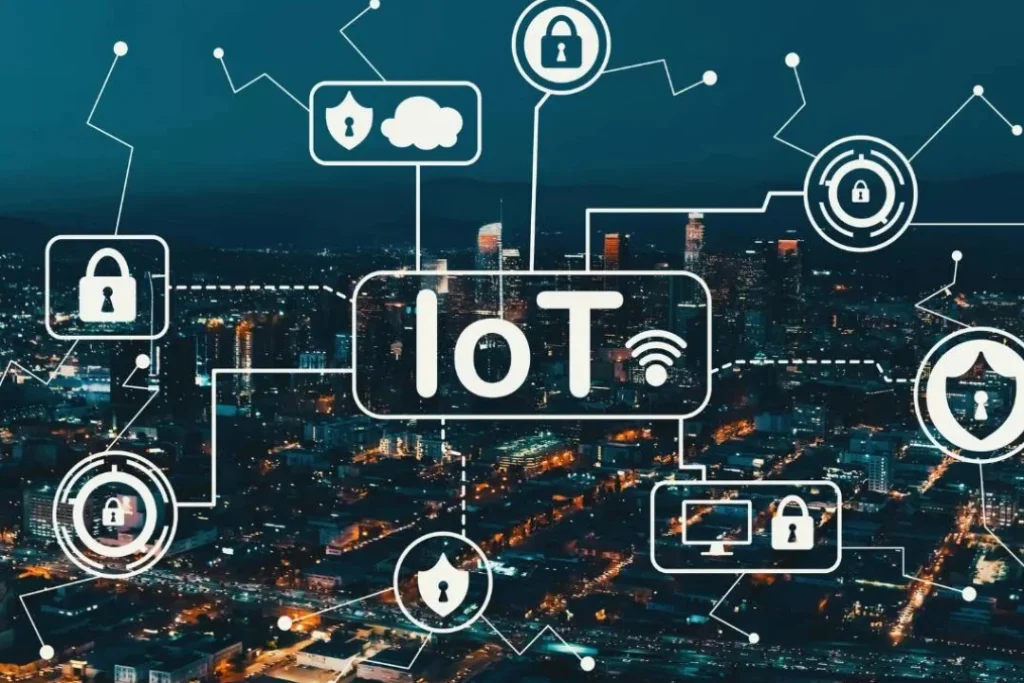
The factory floors have never been quiet and calm areas; there is movement and machinery. But what is under the surface is fundamentally changing. Traditional manufacturing spaces are experiencing an intelligence revolution with sensors installed in equipment, cameras examining every product, and algorithms predicting potential breakdowns.
Numbers substantiate the change. Companies that use connected device technologies have reduced maintenance costs by 35 percent and unexpected equipment breakdown by over half. The business case becomes clear when one hour of unplanned downtime can cost manufacturers between 100,000 and 250,000 dollars.
This transformation is not only for manufacturing. The wider formulation of the Internet of Things is changing the way cities control traffic, how power grids distribute the electrical power, and how businesses operate across industries. Manufacturing just happens to be where some of the most dramatic changes are taking place right now.
How Predictive Maintenance Changes Everything
Traditional maintenance works on two basic principles: fix things when they break, or service them on a fixed schedule regardless of condition. Both approaches waste money. Reactive repairs means that the unexpected downtime restricts production schedules. Preventive maintenance applied too often wastes labor and parts to equipment that does not need servicing, yet.
Connected sensors are completely transforming this approach. Modern equipment is used to check vibration patterns, temperature changes, power consumption, and dozens of other parameters on a constant basis. This data is flowing into systems known as machine learning that are trained on patterns that can be viewed as subtle in the way they happen before a breakdown.
A motor bearing starts vibrating a little bit more than the usual value. Human operators will not notice this minor change but sensors will notice it instantly. The analysis system recognizes this as an early warning sign and alerts the maintenance teams three weeks before catastrophic bearing failure would have occurred. This advance notice enables planned downtime for repairs, timely delivery of parts, and uninterrupted production.
Manufacturing facilities with these systems say they see warning signs of potential failure days or weeks before it might occur. The life of the equipment itself is longer because problems are addressed before the minor problems start to cascade into major damage.
Smart Quality Control That Never Blinks
Quality inspection has traditionally depended on the detection of products by human eyes as they move off production lines. Even the most diligent inspector experiences fatigue from hours of repetitive tasks. Subtle defects make it through, particularly on high-speed lines that produce thousands of units per hour.
Computer vision systems that use artificial intelligence have transformed quality assurance. We use high-resolution cameras to capture images of each individual product. Algorithms trained on millions of examples analyze these images in milliseconds to discover defects human inspectors might not be in a position to see when even new and alert.
A food processing company put connected inspection systems in place and watched their yield increase from 93 to 97 percent. That four percentage point improvement may not sound like much, but multiply it by millions of units, and that is a lot of wasted materials saved and more output. Consistency is important. These systems provide the same level of scrutiny to the first product of the day and the ten-thousandth.
The feedback loops allow production adjustments to be performed in real time. When the system identifies a pattern of defects, the system can automatically adjust the settings of the machine or even alert operators to make corrections before significant waste occurs.
Supply Chain Visibility From End to End
Manufacturing is not done in isolation. Raw materials come into the factory, parts go through various production phases and ready products get shipped to the customer. Traditionally, this complex chain has seen limited protection.
RFID tags and GPS sensors have removed such blind spots. Every pallet, container, and shipment can be traced all the way through the logistics network. Real-time monitoring not only monitors location but also condition. Temperature-sensitive products are kept at necessary ranges. Shock sensors are used to detect rough handling, which may damage delicate items.
This visibility helps to reduce waste due to spoilage, which is especially important for food, pharmaceutical, and chemical manufacturers, where product integrity is essential to ensure that it is kept in particular conditions at all times of transport. Companies are able to prove the chain of custody and comply with regulations. When issues arise, the data pinpoints their exact location and timing, facilitating prompt resolution and averting recurrence.
The benefits of an inventory optimization are an additional layer of value added. Accurate real-time tracking means that companies are able to operate with leaner buffers of inventory. They know exactly what’s in transit and when it will be there and can adjust the production schedules accordingly.
Creating Safer Work Environments
Manufacturing and construction have always had risks to them. Heavy machinery, extreme temperatures, hazardous materials, and demanding physical conditions are all factors that contribute to workplace injuries that harm employees and cost companies millions of dollars every year. Connected Safety Systems Connected Safety Systems significantly enhance the safety of these work environments.
Wearable devices monitor workers for signs of heat stress. The sensors monitor heart rate, body temperature, and other physiological indicators. When readings indicate that a worker is getting too close to dangerous levels of heat exhaustion, the system alerts the individual and the supervisors. Such information is an early warning to avoid medical emergencies that may occur later.
Environmental monitoring is another somewhat similar approach to ambient conditions. Sensors in facilities are used to continuously monitor for dangerous levels of gas, excessive noise, or other hazards. When the readings exceed safe levels, alerts are immediately sent to all people around the affected area.
The information gathered is used for two purposes. Real-time alerts help to avoid immediate dangers, while accumulated data helps to search for patterns and systemic problems. This kind of insight can make it possible to carry out targeted interventions to tackle the root causes of problems as opposed to merely reacting to symptoms.
| Application | Primary Benefit | Typical Results |
| Predictive Maintenance | Prevent unexpected failures | 35% lower maintenance costs, 60% less downtime |
| Smart Quality Control | Automated defect detection | 4-5% yield improvement, consistent inspection |
| Asset Tracking | Real-time visibility | 30% inventory reduction, eliminated spoilage |
| Worker Safety | Proactive hazard detection | 40% fewer safety incidents, faster response |
Addressing Security in Connected Factories
Attackers can potentially target any connected device. Hacking attempts on connected equipment average 820,000 per day, up 46 percent from the previous year. More than half of all deployed devices have at least one critical vulnerability which could be exploited.
Security vulnerabilities often stem from the most basic aspects. Many devices come with the default passwords such as “admin” or “password” that could never get changed. Once attackers get one device compromised, they use it as a stepping stone to get into more valuable devices on the same network.
Outdated firmware presents another issue that is considered a major vulnerability. Research indicates that 60 percent of successful attacks use vulnerabilities that are known but for which patches are available but have not been implemented. Some equipment is running for years without a single security update.
Network segmentation offers one basic protection. VLANs and firewalls should separate connected devices from important business systems. Even if a smart thermostat or surveillance camera is compromised by an attacker, as a result of appropriate segmentation, the hacker cannot reach financial databases or customer data. Companies that have had the right network separation have seen costs for breaches reduced by 35 percent.
Powerful authentication is important from the beginning. Every device requires its own credentials, and not the same password used by multiple devices. There is also multi-factor authentication as another layer of protection. Devices should have access to only those network resources they require in order to function.
Continuous monitoring with the help of machine learning helps to keep a check on threats at an early stage. The modern security platforms create the baseline behaviors on the devices and networks. When something goes out of that baseline, the system gives alerts. Advanced platforms are capable of responding automatically, putting compromised devices in a quarantine state before they create the opportunity for them to spread malware or steal data.
Making the Transition Work
The future ahead calls for thoughtful planning rather than jumping to implement all available technology. Pilot projects targeting specific pain points are where organizations achieve the most successful results. These pilot implementations offer learning before scaling up.
It requires more than technology to be successful. Teams require training to work well with new systems. Processes need to be updated to take advantage of the capabilities that connected devices offer. Companies that make the effort to build these foundations alongside the implementations of technology see much better results.
Manufacturers must figure out how to safely and effectively adopt these technologies. The efficiency improvements, cost savings, and quality improvements are too high to dismiss.
What This Means Moving Forward
Manufacturing is at an inflection point where the convergence of sensors, connectivity, artificial intelligence, and edge computing can bring the capabilities of today that were unimagined even a few years back. Today, operational realities include equipment that predicts its own failures, quality systems that consistently detect defects, supply chains with complete visibility, and safety systems that prevent hazards instead of merely reacting to them.
The transformation extends far beyond the confines of the factory. Connecting technologies are transforming the urban infrastructure and the way cities manage their resources, while allowing for new business models in industries. Manufacturing offers a good example of how these systems offer real value if implemented with good thought.
The organizations that are thriving in this environment are balancing innovation with caution. They move forward with intention and try things out and gain expertise. They have security as a primary concern from the start instead of an afterthought. Most importantly, they recognize that technology is an enabler, but at the end of the day, it’s people, process, and strategic thinking that ultimately drive the success of implementation.